PASMAE-ISME Regional Conference

2027 PASMAE-ISME Regional Conference
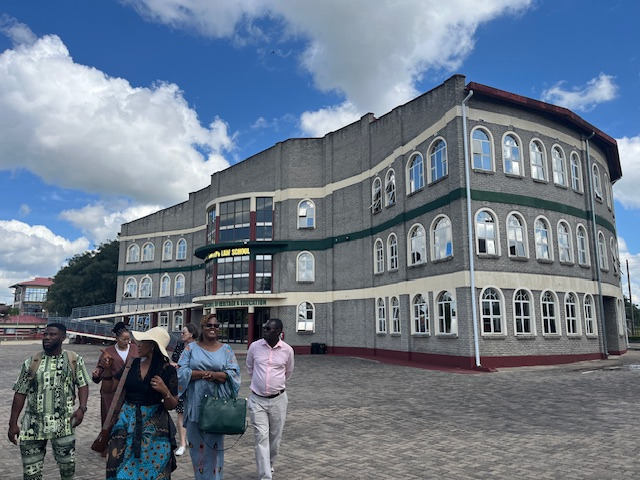
Masvingo, Zimbabwe.

Our next regional conference is the 2027 PASMAE-ISME Regional Conference, Masvingo, Zimbabwe.

The conference will run from the 5th to the 9th of July 2027.

Dates

  • Registration Monday 5th July from 3-5pm
  • Opening Monday 5th July from 5pm

Sessions will run every day, ending with the Closing Ceremony at 13:00 on 9 July 2027.

A detailed timetable will be available here as it becomes available.

Venues

Great Zimbabwe University (GZU), Masvingo, Zimbabwe

  • GZU School of Heritage and Education
  • GZU Law School

The GZU boasts a large auditorium, performance area and rooms which contain all the facilities and equipment required for a music conference.

Great Zimbabwe University (GZU), Masvingo, Zimbabwe

Keynote Sessions

Among the highlights of PASMAE-ISME Regional Conferences are the presentations at Plenary Sessions by invited Keynote Speakers. Work is in progress to present to delegates some inspiring speakers, so watch this space for further information.

About Zimbabwe

People and Languages

Zimbabwe’s largest ethnic group are the Shona, who make up 80% of the population, followed by the Northern Ndebele and other smaller minorities. Zimbabwe has 16 official languages, with English, Shona, and Ndebele the most common. The country is a member of the United Nations, the Southern African Development Community, the African Union, and the Common Market for Eastern and Southern Africa.

Tourism

Zimbabwe has several major tourist attractions. The Victoria Falls on the Zambezi, which are shared with Zambia, are located in the north-west of Zimbabwe. Victoria Falls is considered to be the largest waterfall in the world. The Victoria Falls National Park is also in this area and is one of the eight main national parks in Zimbabwe, the largest of which is Hwange National ParkLake Kariba, another site for tourism, is the largest reservoir in the world.

Zimbabwe is unusual in Africa in that there are a number of ancient and medieval ruined cities built in a unique dry stone style. Among the most famous of these are the Great Zimbabwe ruins in Masvingo. Other ruins include KhamiDhlo-Dhlo and Naletale. The Matobo Hills are an area of granite kopjes and wooded valleys commencing some 35 km (22 mi) south of Bulawayo in southern Zimbabwe.

Music

Zimbabwean music is heavily reliant on the use of instruments such as the mbiraNgoma drums and hosho. Their music symboliszes much more than a simple rhythm, as the folk and pop style styled music was used as a symbol of hope. Music has played a significant role in the history of Zimbabwe, from a vital role in the traditional Bira ceremony used to call on ancestral spirits, to protest songs during the struggle for independence. 

The PASMAE-ISME Regional Conference will showcase Zimbabwean music and musicians.

Arts

Traditional arts in Zimbabwe include pottery, basketry, textiles, jewellery and carving. Among the distinctive qualities are symmetrically patterned woven baskets and stools carved out of a single piece of wood. Shona sculpture, which has a long cultural history, began evolving into its modern form in the mid-20th century and gained increasing international popularity. Most subjects of carved figures of stylised birds and human figures among others are made with sedimentary rock such as soapstone, as well as harder igneous rocks such as serpentine and the rare stone verdite. Zimbabwean artefacts can be found in countries like Singapore, China and Canada — for example, Dominic Benhura‘s statue in the Singapore Botanic Gardens

Science and Technology

Zimbabwe has a relatively well-developed national infrastructure and a long-standing tradition of promoting research and development. The country has a well-developed education system, with one in 11 adults holding a tertiary degree. Given the country’s solid knowledge base and abundant natural resources, Zimbabwe has great growth potential. Zimbabwe was ranked 129th in the Global Innovation Index in 2025.
Source: UNESCO Science Report: towards 2030 (2015)

Getting There

Getting to Zimbabwe primarily involves flying into one of its international airports, with most visitors arriving via air travel through regional hubs in Southern Africa. 

Road travel is also an option from neighbouring countries. 

By Air – Most international travellers fly into Robert Gabriel Mugabe International Airport (HRE) in Harare, the capital, or Victoria Falls International Airport (VFA), which is ideal for travellers heading directly to the falls and nearby national parks. Travellers can also fly into Bulawayo.

Conference Travel

Travel from Harare or Bulawayo, and from the South African border at Beit Bridge is about a 3 ½ hour road trip by car or by bus.

Buses are an option and although they take longer, they are comfortable and inexpensive.

Accomodation

Accommodation options will be added here in due course. There will be a selection of accommodation options to suit all budgets. 

The Great Zimbabwe University will arrange for a shuttle bus from the main accommodations to the conference venues.

Please check cancellation policies direct with the accommodation of your choice. PASMAE will not be responsible for changes or charges incurred in connection with your accommodation.

Health and Safety

  • Always carry your ID, such as a copy of your passport.
  • Malaria is a risk everywhere except in Harare and Bulawayo. Consider taking anti-malarial medication or other preventative measures. 
  • Petty crime is present in Harare and Bulawayo. Be mindful of your belongings.
  • Ensure your accommodation is insect-proof. 
  • Use insect repellent.
  • Drink only boiled or bottled water. Avoid raw or undercooked food. Ensure your vaccinations are up-to-date. 
  • Don’t swim in lakes and rivers due to the risk of waterborne diseases.

Call For Presenters

You are invited to join us at the 2027 PASMAE-ISME Regional Conference in Zimbabwe. Our theme reflects music as a powerful tool to inspire and motivate all people in Africa towards a better future.

Presenters are asked to submit abstracts of between 250-300 words. A link to the PASMAE-ISME Regional 2027 Conference Abstract Submission online form for presenters to submit abstracts will be available soon.

Only those who have paid their PASMAE membership and conference registration fee will be eligible to have their abstracts reviewed in order to present.

The programme caters for the following categories: 

  • Spoken paper presentation (20 min) followed by discussion (10 min) 
  • Poster presentation 
  • Workshop/Demonstration (45 min) followed by discussion (10 min) 
  • Symposium/Round Table (45 Min) followed by discussion (10 min) 
  • Exhibition

Partners and Sponsors

We are grateful to ISME  and the GZU for their support, as well as all who generously support PASMAE financially and in kind.

Membership

All presenters and delegates must be paid-up PASMAE Members, at the time of application, acceptance and registration. Register as a member now

CategoryPASMAE membership fee for 2 years 
Full membership fee for all delegates USD 25
Full membership fee for full time student USD 15 
Organisation/InstitutionsUSD 50
Currency converter: http://www.xe.com/ucc

Registration

Information and on-line registration for the 2027 PASMAE-ISME Regional Conference coming soon.

VISAs

Visitors to Zimbabwe are advised to check with their respective countries and to apply early for travel visas to avoid cancellation of their registration

Tours and Excursions

More info soon!